- Posted On:2026-04-20 17:04
-
503 Views
When Cloud Systems Learn to Heal Themselves: A Silent Revolution Led by Intelligent Log Tracing
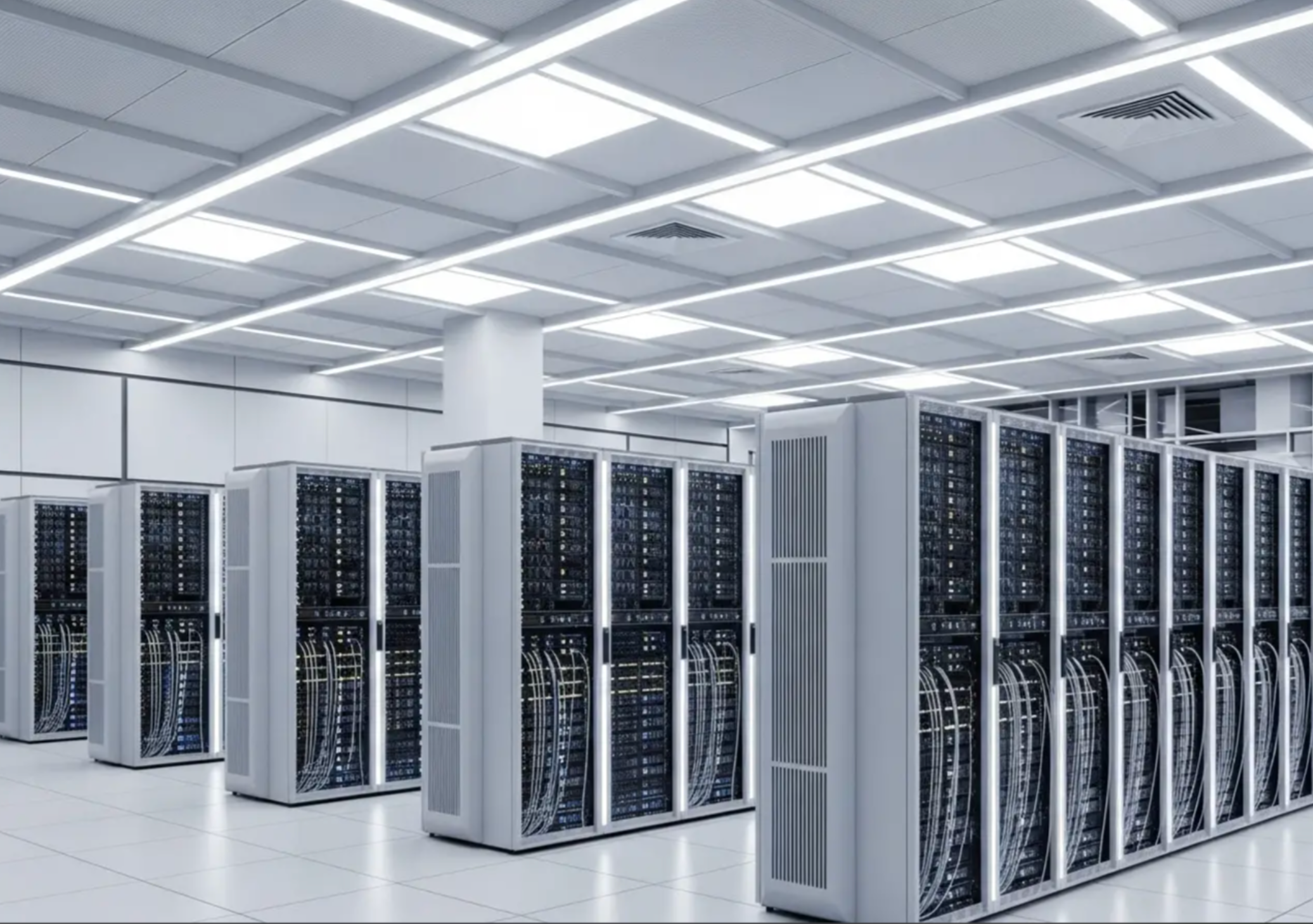
In the heart of Silicon Valley and across data centers worldwide, a silent revolution is unfolding. It’s not driven by new hardware breakthroughs or flashy applications, but rather by something much humbler — log files.
Once seen as dull, overwhelming, and nearly indecipherable, these records of system activity are beginning to “speak,” and even “predict the future,” thanks to the power of artificial intelligence.
As microservice architectures have become the standard for cloud-native applications, a single user request can traverse dozens or even hundreds of independent services. It’s akin to tracking a passenger’s live journey through New York City’s tangled subway system using only fragmented clues.
“We have more data than ever before, but not necessarily more insight,” said Ben Carter, a senior operations engineer at Netflix. “Traditional log tracing tools are like an encyclopedia without an index — the answer is in there somewhere, but good luck finding it. When systems experience intermittent failures or localized instability, pinpointing the root cause feels like searching for a needle in a haystack.”
This is the core dilemma facing the cloud computing industry today: exponential data growth paired with declining information density. Static sampling risks missing critical anomalies, while full-scale tracing incurs unsustainable storage and compute costs. The industry’s grand challenge lies in finding the equilibrium between total visibility and cost efficiency.
Amid this backdrop, an academic paper titled Research on Automated Deployment Method of Operating Systems Based on IPv6 in Cloud Computing Environment has quietly circulated among top engineers and system architects. Its first author is Guan Yang, a software engineer.
Rather than proposing a brand-new system to replace existing infrastructures, the paper introduces an empowerment framework — one that endows tracing systems themselves with a form of cognition.
“What drew me most was its ‘adaptive’ philosophy,” commented a distributed systems researcher at UC Berkeley. “It doesn’t prescribe rigid rules, but builds a self-learning, self-optimizing feedback loop. Its intelligent sampling mechanism mirrors how human attention works in complex situations — filtering out noise and focusing on where things might go wrong.”
The paper’s semantic modeling approach has also sparked interest across both academia and industry. By applying advanced natural language processing (NLP) techniques, it addresses the semantic ambiguity in distributed logs — where different services may use different words to describe the same event — and builds a unified understanding from the chaos.
“It’s like writing a universal dictionary for every microservice’s dialect,” said a Google engineer specializing in cloud observability. “This enables true cross-team and cross-system analytical collaboration. Yang’s work lays the semantic foundation for future autonomous operations.”
The emergence of such a visionary yet pragmatic framework is no coincidence. Public records reveal that Guan Yang has a rare interdisciplinary background — from a foundation in Physics at Nanjing University to Information Technology at California Lutheran University — a combination that enables him to bridge abstract theory with large-scale engineering realities.
His tenure on Microsoft’s Azure Core team placed him squarely in the “eye of the storm,” facing the toughest challenges of global-scale distributed systems. Yang’s contributions to the Autopilot Provisioning project, which oversees automated deployment and security across Azure’s worldwide server clusters, demanded mastery across the entire stack — from operating system kernels to orchestration layers.
“Only someone who has worked at the storm’s center can strike at these pain points with such precision,” remarked a peer who met Yang at an industry conference. “His research doesn’t live in the ivory tower. You can feel the scars of real production struggles — and the ingenuity born from them — in every line.”
Yang’s paper can be seen as a harbinger of a paradigm shift in cloud operations. It hints at a future where systems are no longer rigid tools needing constant manual configuration and tuning, but living systems — capable of sensing, understanding, and continuously optimizing themselves.
From e-commerce flash sales and IoT data pipelines to high-stakes financial transaction systems, virtually every cloud-dependent industry stands to gain from this evolution in intelligent observability. Systems will fail less often, recover faster, and in many cases, heal themselves before users even notice.
Though Yang’s paper represents just one step in a long journey, it points clearly toward a destination: when cloud systems can diagnose and heal themselves through intelligent log tracing, we will unlock vast reserves of human and computational potential — propelling us toward a more efficient and reliable digital future.
And engineers like Guan Yang — fluent in both low-level infrastructure and cutting-edge AI — will be the ones leading us there.